


Cave Rescue
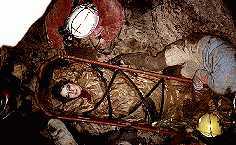 "Hazards" of Caving -- Caving gear, when well-maintained, rarely fails. Indiana caves don't contain biting snakes or other animals, ceilings rarely "cave in," and it's generally not very easy to get lost. The dangers facing cavers usually originate with the cavers themselves. They may kick rocks down on each other, lose their footing and fall, or use equipment improperly. The most common cave rescue involves novices with little or no training; such people often take along insufficient light and clothing, or fail to heed weather reports.
The problem with cave rescue is that the caver is often a long way into tight passages, and the logistics of bringing aid and removing him without his assistance can be a challenge. Also, Indiana caves are about 53°F year-'round; if a caver is immobilized by injury, a real danger of hypothermia exists.
 Dealing with an Injury -- First, try to stabilize the victim. Avoid moving him unless he is in water. Try to stop any bleeding by direct pressure on the wound, and elevate the legs if the victim is in shock. Cover with additional clothing or other materials to ward off hypothermia. Then go get help.
Police, fire departments, and most other public servants are rarely trained or equipped to deal with cave rescue. The National Cave Rescue Commission is a volunteer communications network developed to coordinate cave rescue resources throughout the United States. Most NCRC cavers do perform rescues, but not as part of the NCRC; rather as members of their local rescue squads, civil defense units, or cave rescue groups.*
If a rescue is required, dial the Bloomington office of the Indiana State Police, 812-332-4411. This office is relatively familiar with cave rescue protocols. If you don't have ready access to this number, or you don't get a prompt response, by all means call the local fire department or other rescue groups.
 Caving Safely -- Most rescues could have been avoided if the cavers had followed some simple guidelines:
- Each caver must wear a helmet at all times.
- Each caver must have a helmet-mounted light and two or more independent backup lights.
- Cave in groups of no less than four people. If someone gets hurt, one person can attend to the injured caver while the other two go for help.
- Wear appropriate clothing. If you'll be wet for any period of time, wetsuit bottoms are almost mandatory.
- Use common sense. Don't enter a stream cave when rain is predicted. Don't drink or use other intoxicants prior to caving.
- Tell someone where you're going and when you will be back, and post the cave rescue call-out number nearby.
There is no substitute for caver training, and no single list of precautions can ensure a safe caving trip. If you intend to go caving, please contact experienced cavers beforehand for guidance.
*The NCRC offers weekend training sessions for cave rescue throughout the central region 4-5 times a year. Cavers are encouraged to attend these sessions. For more information, contact Jessica Deli at central@ncrc.info.